Jeslin JohnUAE
Years in IT. Something was missing.
Leaving an IT career for a UAE classroom.
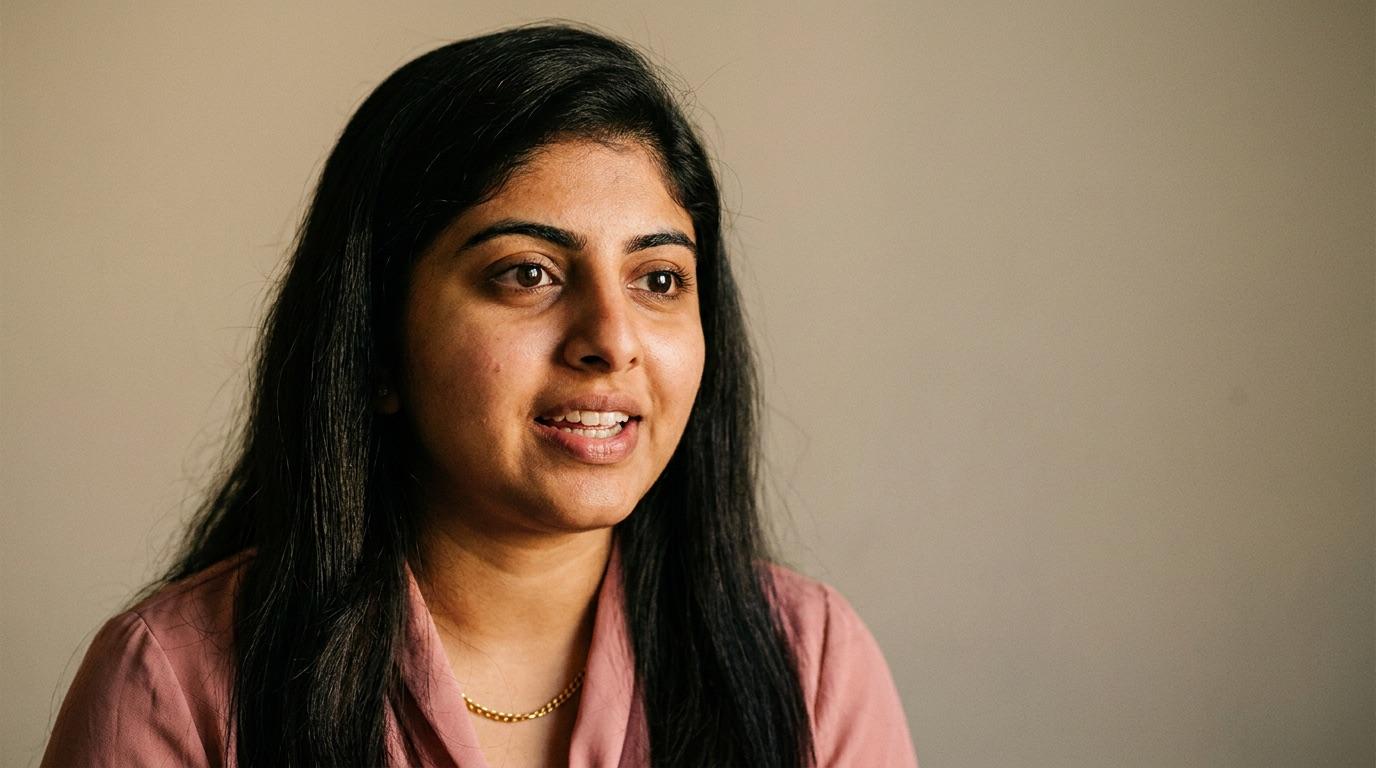
- Now
- Teacher, UAE
- Placed as
- Teaching assistant, then teacher at an American curriculum school, through Suraasa
- Before
- Five years in an IT company in Bangalore, then work as a trainer
- Programme
- PgCTL
She spent years in IT and then training, sure something was missing, but schools would not take her without a teaching qualification. PgCTL gave her that qualification, and she moved from a teaching assistant post into a teaching role at an American curriculum school.
A decade of changing fields.
Jeslin John graduated in 2011 and started work at an IT company in Bangalore. She stayed five years. Then she moved to Oman and was a trainer for a while. After coming to the UAE she wanted to be a teacher, and switched her profession to teaching. “I’ve worked in the IT field. I’ve been a trainer, but I felt there was something missing,” she says. She has now been working for over a decade and has been in teaching for three years. As a teacher, she started in the UAE.
No two years to spare.
She expected the switch to be hard. When she applied to a couple of schools, they asked for a teaching qualification. At her age, she says, she did not have a lot of time. “I didn’t have two years to do a bachelor’s and then look for a job.” She had also noticed where the real obstacle sat. “To get to that first school is very difficult,” she says. “Once you have that experience it becomes easier.”
So she looked for a course that would do two things: work on her skills, and give her profile a push when it came to placement. She is frank about which mattered more. The reviews and testimonials for Suraasa were good, “so I thought, OK, I’ll just give it a try, but mainly it was a placement.”
More than standing and teaching.
Her picture of the job was an old one. “I thought it was a traditional way where you just had to stand there and teach,” she says. The programme’s ten modules introduced her to differentiation, which she names as her main takeaway, though at first she was not sure she would be able to do it. She found the trainers knowledgeable, and usable as models. “The way they take classes, you can actually copy those in your classes as well.”
Her fellow students were working teachers, some in the UAE and some in different states of India, and she counts hearing their experience as exposure in its own right. There was a separate module on technology, and the class used a couple of tools during the sessions themselves. That paid off later. In an interview, she says, it was easier “to confidently say we have used all these”.
After joining Suraasa I got to know about differentiation.
A teaching assistant first.
She says at least three schools came to her through Suraasa, and she was placed in two. The first time, she did not feel confident, and she asked for a teaching assistant post. Suraasa told her they thought she should try for a teaching role instead. She pressed, and they connected her with a school where she got in as a teaching assistant.
Once there, she changed her mind about what she could do. She went back to Suraasa and asked for another placement, this time as a teacher. They put forward an American curriculum school and arranged an interview. She got in. The schools Suraasa offers, she says, are quite good.
She did not wait for offers to arrive. “I didn’t completely rely on Suraasa to bring an offer to me,” she says. She sent her CV out herself, collected contacts, and passed them to the placement team: “Hey, do you know these people? Can you talk to them?” Sometimes the team sent her profile to schools; sometimes she sent the team names. “It was a two-way thing,” she says, and faster for it.
I realised I can actually be a teacher and I can contribute more.
The same questions, again.
Apart from the ten modules there was a session on employability, which she calls the best part. By her recollection it included at least two or three interviews. In most of the interviews she attended, whether they came through Suraasa or not, she found the questions “more or less the same”. Other teachers told her the same thing. “We were kind of ready when we attended an interview.”
Her profile page on the portal filled up as she went. Every assignment she wrote was added to it, and it showed her skills as percentages, in what she remembers as “the pie chart kind of a thing”. Suraasa shared the profile with schools, and she borrowed from it when she edited her resume. It also showed her where she stood and what still needed work.
The contact has not stopped with the placement. She says she can still go back to Suraasa, and that it works the other way too: recently someone there told her about an opportunity in the US. “Even now when there are opportunities they contact you,” she says. “It’s a lifelong thing. They keep in touch.”