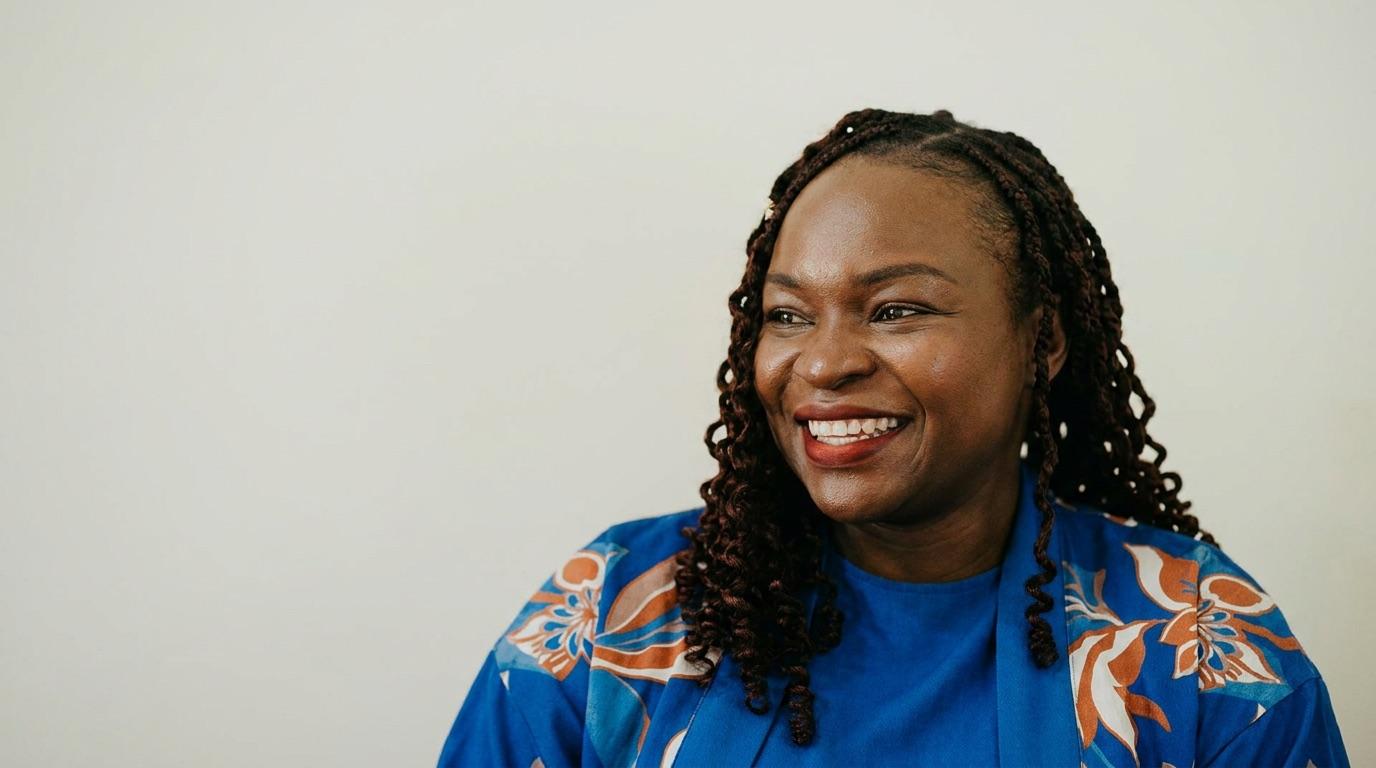
Sikhanyiso Maviza LovenessUAE
Nursery teacher. Now intervention specialist.
Building the intervention class her school shows off.
- Now
- Intervention specialist, KG to grade 5, at a school in the UAE
- Before
- Nursery teacher, then blended teacher for KG1 and KG2
- Background
- Special education needs certificates and a degree in youth work
- Programme
- PgCTL, recommended by her principal
She came to the UAE as a nursery teacher and was moved into inclusion without any teaching qualification, suddenly facing lesson plans, assessments and parent meetings. PgCTL changed how she planned and managed her room, and she now runs an intervention class from KG to grade 5.
Inclusion, without a teaching diploma.
Sikhanyiso Maviza Loveness did not set out to work in inclusion. In a nursery, she says, “you get to work with different kinds of students with different needs”, and she found herself being pushed towards the inclusion department. She joined a centre, where the work was one-on-one, and she credits it with helping her get to where she is now.
Then she moved to a school as a blended teacher, taking KG1 and KG2 at the same time. It was a small class, made up of students with learning disabilities. What she brought with her were special education needs certificates and a degree in youth work.
Now from a blended teacher, I became an intervention specialist from KG to grade 5.
Two years of saying no.
Her principal raised it at every teacher meeting. As she recalls it: “If you don’t have any teaching diploma, you need to join Suraasa.” 2021 passed. “I don’t think I need it because I’m doing inclusion,” she told herself. “And my class is very small.” Then 2022 passed, and reality was catching up. She was used to one-on-one work from the centre. Now there were lesson plans, lots of assessments, relationships to build with students and parents, and other teachers to collaborate with. “Something really must be missing,” she thought.
By then she was pregnant. She went to her head of department and said she was thinking of doing PgCTL. The answer was to go ahead and register. She asked how she would manage with a baby coming very soon. “You’ve always been doing things, even if you’re pregnant,” she remembers being told.
An interview, then a baby.
The admission interview surprised her. “I’ve never went to any institution where they say, we have to interview you first,” she says. They asked who she was, what she did and why she wanted to take this path. She came to see it as the start of a relationship: “They wanted to know me and they also wanted me to know them.” They told her they would help throughout, not only with her studies or registration. She had heard that from institutions before.
She started the classes, and then the baby arrived. People from Suraasa called to ask how she was doing and to congratulate her. “Who takes the time to say the student has a baby?” she says. There was a stretch when it became tiring, with a new baby, a family and assignments to do, and she told a colleague it must have been the pregnancy hormones that made her say she would do it. “With the constant support that I was getting, I didn’t end up feeling overwhelmed the way I thought,” she says.
No longer thinking on her feet.
The first change was in planning. “Lesson plans, no longer only thinking on my feet,” she says. In inclusion, she explains, the work follows the individual plan of each child. Now she had small groups as well, and she was making good lesson plans. Her head of department noticed. “This is what I was talking about,” she recalls hearing.
The second was behaviour. She had worked with neurodiverse students for some time and felt she might know everything. “I learnt classroom management in a different way,” she says. She had thought it only had to be about the sensory side. “But it encompassed also me and the needs of the students and the environment.”
Her role changed too. She moved from blended teacher to intervention specialist, working with KG to grade 5. Her principal, she adds, “speaks big things” about her. Parents keep coming to see the classroom, and the school’s CEO has visited as well, telling her it was a good programme and that she was doing a good job. She puts it down to “getting to know more about how to work as a teacher and how to relate with the students, how to build the environment”.
When he’s promoting the school, he’ll be like, I have an intervention teacher. You want to come and see her classroom?
Still learning.
Sikhanyiso has not finished with Suraasa. She is still working through its interview programme, with an interview yet to come. “So you see I’m still learning,” she says. She describes herself as one of those people who is always studying something: “I cannot stay a year without learning something.”
To anyone in two minds about carrying on with the programme or dropping off, her answer is short. “Just continue,” she says. She knows how hard the work is, and that teachers at times doubt whether they can do it. “It’s us who carry the whole world in our hands,” she says. “And we have that ability.”