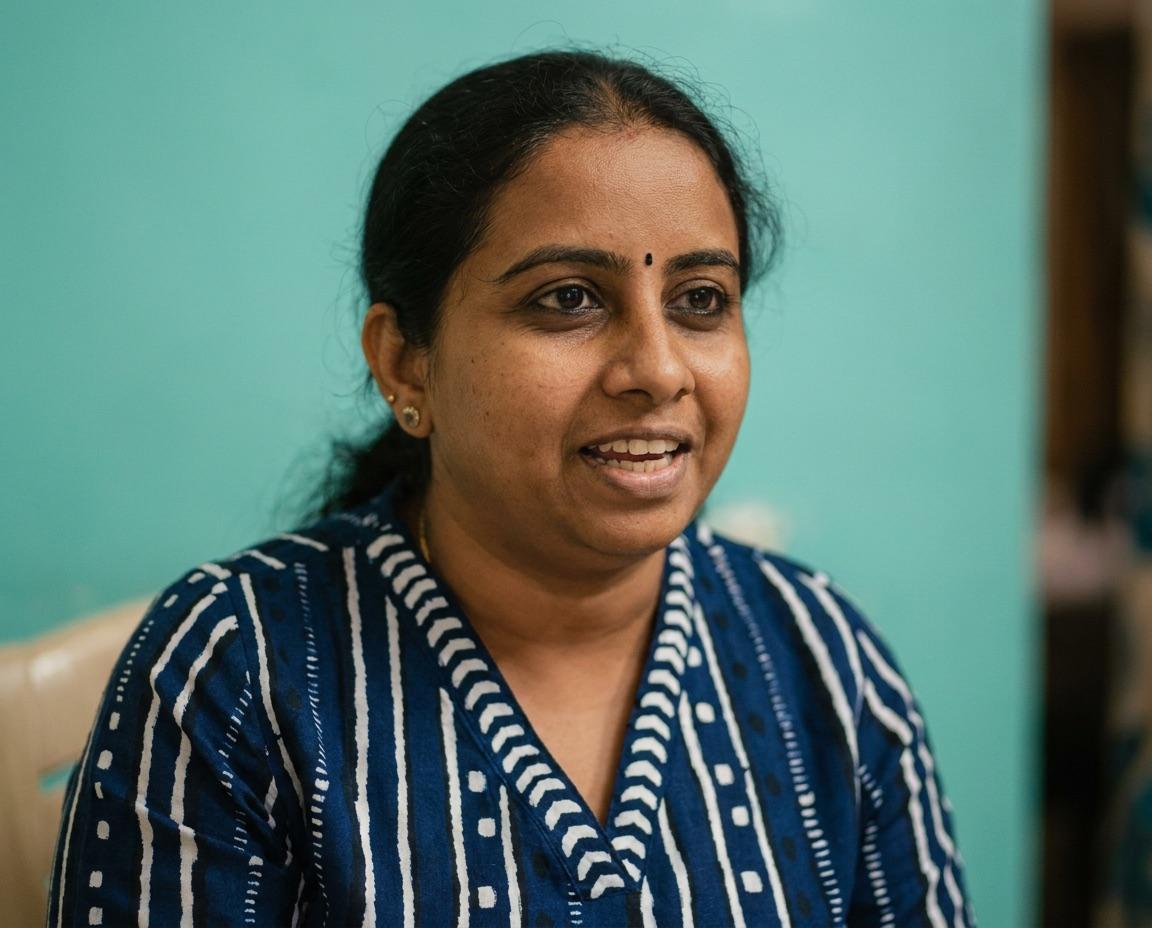
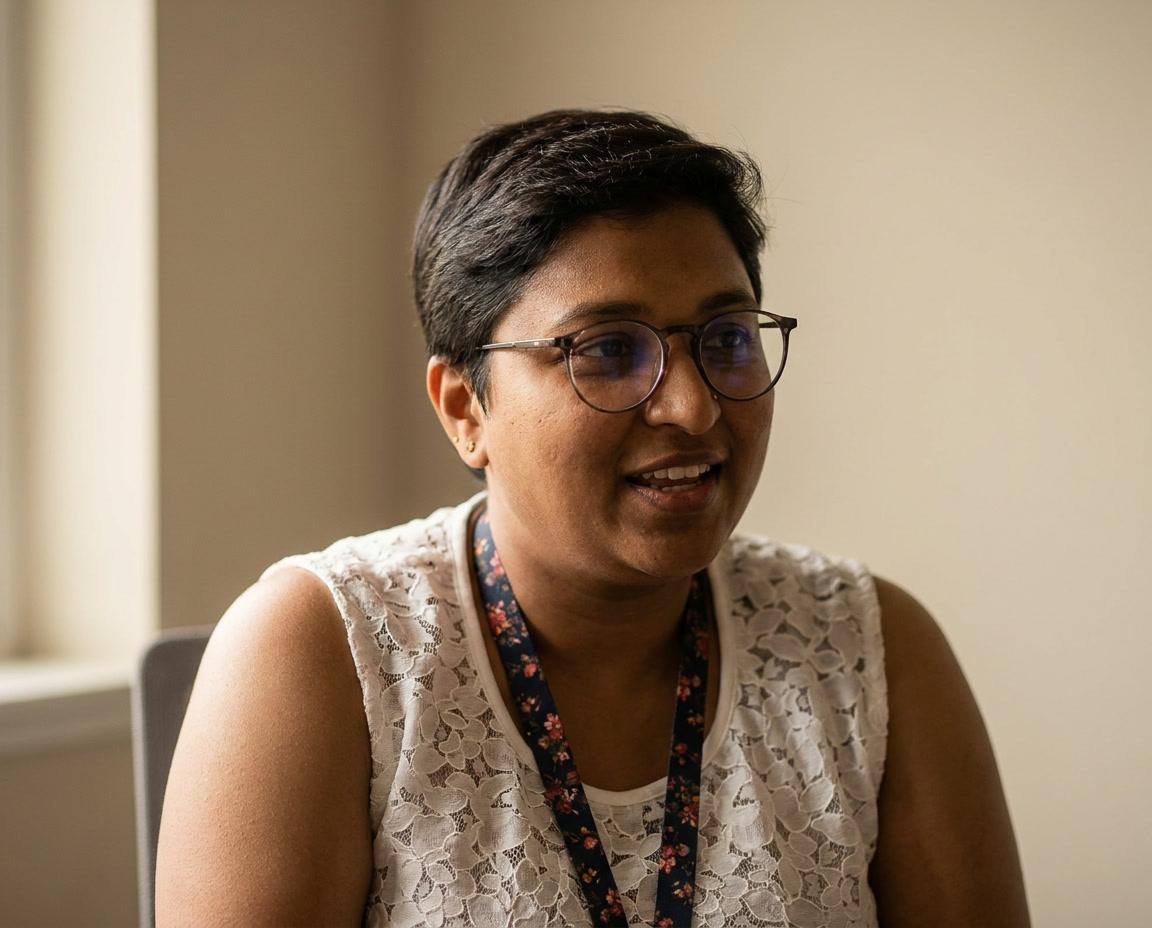
Amala R
Learning what a lesson plan actually is
- Roles
- Trainer, teacher and professor
- Programme
- A Suraasa course
- Applied
- University question papers set with Bloom’s and reverse Bloom’s taxonomy
Amala had been teaching, training and lecturing for years without ever having written a lesson plan, and had not heard of Bloom's taxonomy. Through PgCTL assignments she learned to build lessons and questions around it, and has set university question papers using Bloom's and reverse Bloom's.
Trainer, teacher, professor.
Amala R has worked as a trainer, a teacher and a professor, and she is blunt about what she did not know in any of those roles. “I would say, what is lesson plans? I never knew what it is,” she says. Nor did she know what could be built into one. “Bloom’s taxonomy is very important when you are preparing lesson plans, when you’re preparing questions, question papers,” she says.
She has put it to use. “I have prepared question papers for universities using those Bloom’s taxonomy and reverse Bloom’s taxonomy,” she says, then checks herself: “I hope I’m not talking Greek and Latin.”
Assignments made it practical.
As the course advanced it turned to technology, and to using it to create lesson plans. It also covered a methodology she had not known about, one that takes in the visual and the auditory. Until then, she says, “I thought normally you teach everybody.” She adds: “I never understood.” What changed that was the coursework, “specifically when I started doing my assignments and getting practical aspects of it”.
Her reason for wanting the knowledge whole is a practical one. “I always believe half knowledge is very dangerous,” she says. “If you don’t know what you are doing, you might end up in a very bad situation, and you don’t want to be questioned in front of others.”
It is a very long way that I have come from when I took a course to now.