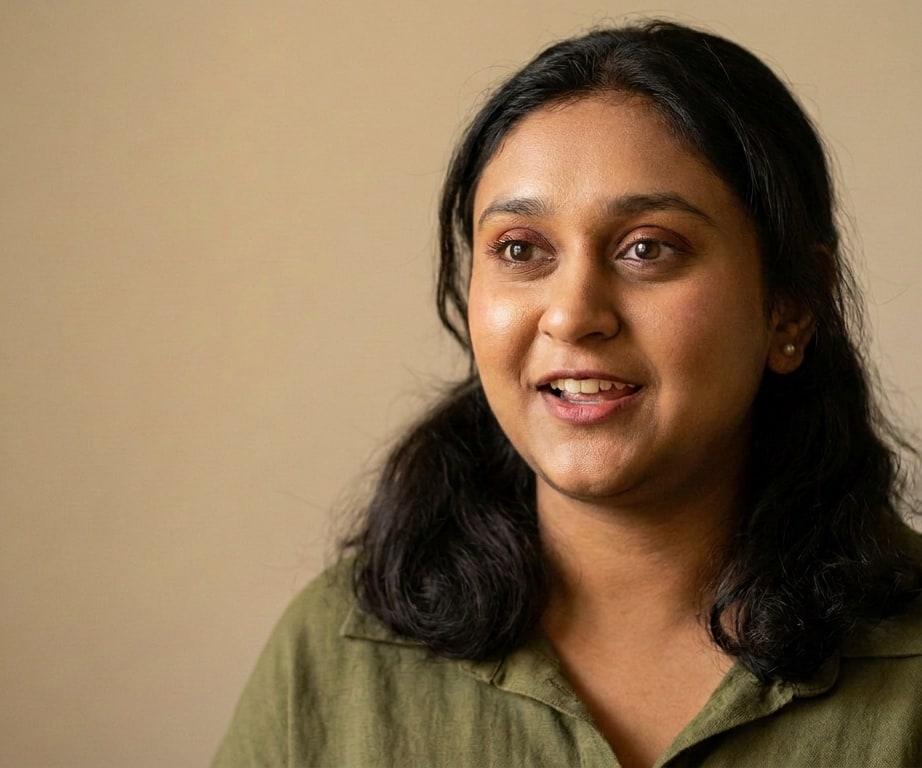
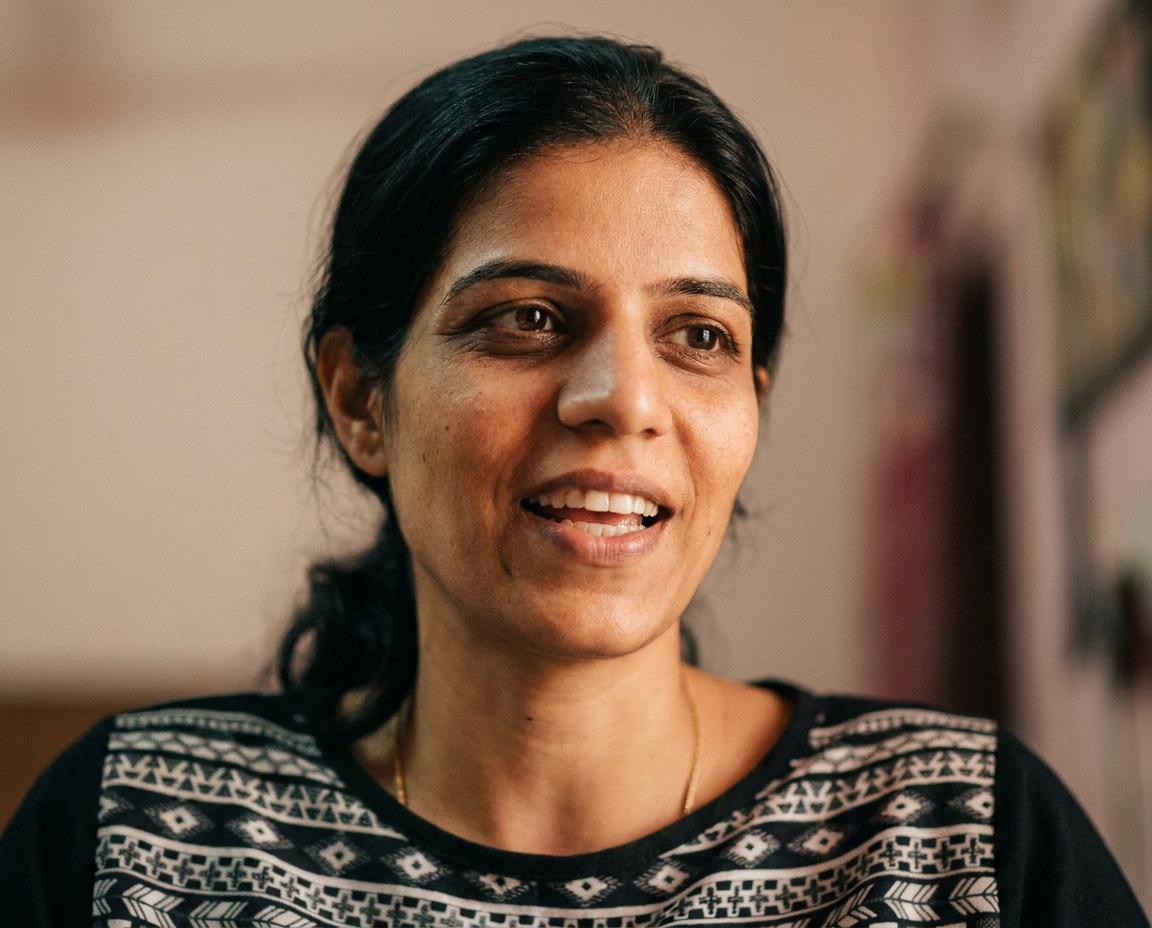
Ami Marthak
Ten years. One IB classroom.
Reaching an IB classroom after ten years teaching.
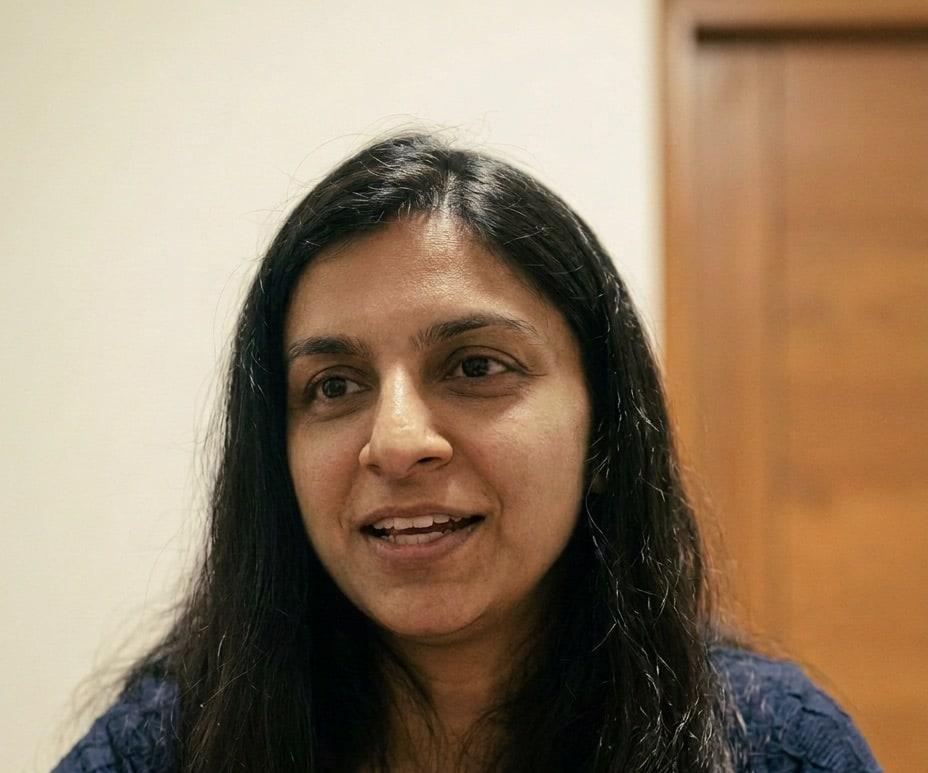
- Now
- Accounting and business teacher at an IB school abroad, since September
- Before
- More than ten years teaching: five in primary, six in grades 11 and 12
- Programme
- PgCTL, six modules done, now on assessment and evaluation
- Next
- Understanding IB in detail, and the modules still to finish
Ami fell into teaching as a substitute in Mumbai and spent a decade in senior-grade commerce classes, running them by lecture and blackboard. Two questions about IB from a head of academics were enough, and within a week she had an appointment letter and a visa.
A substitute, just for fun.
Ami Marthak was a backbencher, she says, with incomplete books and “no interest in studies at all”. She started working as a substitute teacher for the fun of it. Then she was offered a vacancy for the next academic year, and thought she would try it: it would put some extra money in her pocket and give her some experience.
“After being into teaching I realised that’s the only thing I can do and I want to do,” she says. Her degree is in commerce, with a master’s in accounting and finance, and the corporate world frightened her: “I was scared to be in that open environment with different kind of people.” She began a B.Ed at 23 and finished it by 25. Of her more than ten years in teaching, five were in primary and the last six in grades 11 and 12.
Content, but not skill.
What she wanted from Suraasa, at first, was a placement. “I had just one thing in my mind,” she says: a good school, maybe in the UAE. Her first conversation with a mentor, in December, ran to almost an hour, and she still was not sure it was worth the investment.
The first two lectures changed what she was there for. “It’s nowhere about the job, it’s about improving yourself,” she says. She had taught with the board and the lecture method: “Just have lecture method, the class is done.” “As a teacher I might have content knowledge but I was not skilled.”
Job is secondary option for me. The primary is how better I am as a teacher.
Allowed to fumble.
The lectures came with activities, and students had to speak. “I am someone who is an introvert,” she says. “I get scared when I have to speak something in public suddenly from nowhere.” For the first month she was scared. Then it eased. “It’s okay to fumble. It’s completely fine if your answers are wrong,” she says, because everyone in the class was there to learn.
The programme, she realised, was about finding the errors in her own teaching. “Teaching is not about you, it’s about your learners,” she says. She learnt how children prefer to learn, by audio, by video or by doing, how to bring IT tools into a lesson, how to ask questions, and how to change the classroom setup from one lesson to the next.
Assignments were the struggle. “I struggled to submit assignment on time,” she says. At the time of recording she had finished six modules and was on assessment and evaluation.
Whatever I’m learning on Sunday, those things I try to implement in my next class whenever I meet my learners.
Two questions, then a third.
The job did not come through Suraasa’s job portal. In class, students were encouraged to be active on LinkedIn, and she was. Around the end of August she heard through a connection that a school needed an accounting and business teacher. She sent an email, a reply came within minutes, and she had a call the same day. “Only on that one call I was selected,” she says.
The interviewer was the school’s head of academics. He asked whether she had taught the IB curriculum. “No, sir, I have not taught,” she told him. He asked whether she knew how IB and the Indian curriculum differ. That she could answer, “because this thing I am learning from day one”. She told him it was about going beyond the books, and about changing strategies to suit the learner.
His last question was when she could fly. She did not know what to make of it. “Is it done? Is it right? Is it wrong? Whether it is fake or no?” The appointment letter and the visa followed, and she arrived at the start of September. She has been working at the school since.
Not even 20 per cent.
She describes the school as a positive place where teachers are given charge of their own classes. “It’s your class, you plan out your things,” she says. She has to understand IB in detail. She also took a two-month break from the programme because of the move, and she has modules left and assignments pending. “I feel I have not even learnt 20% of it so far,” she says.
“I always had a dream to become an IB educator and it took me 10 years,” she says. A better position may come in a few years, she thinks, but “right now I’m very new so I have to learn how to become a good IB educator”. A recruiter, she has come to believe, will not look at your content, “because content could be learnt within a year, within six months, but skills are for life”.