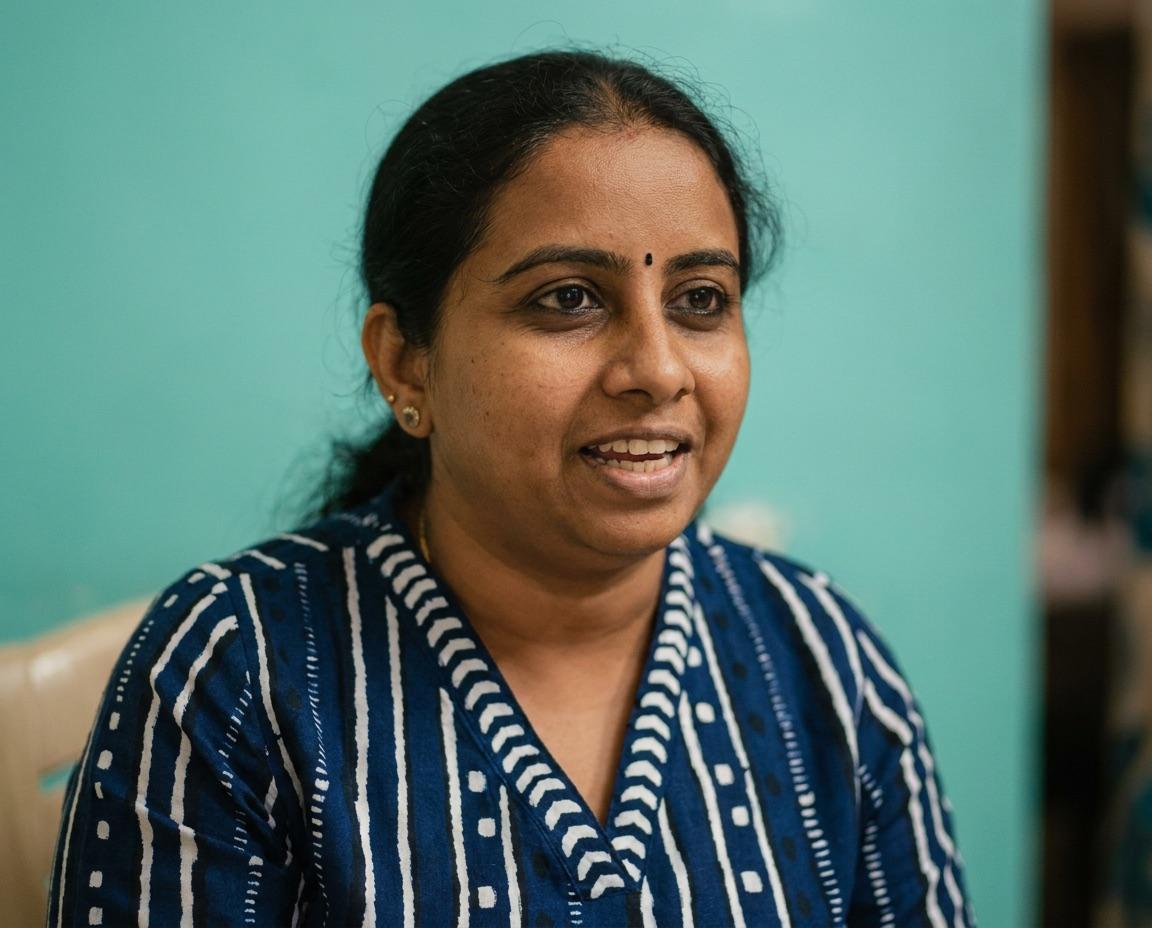
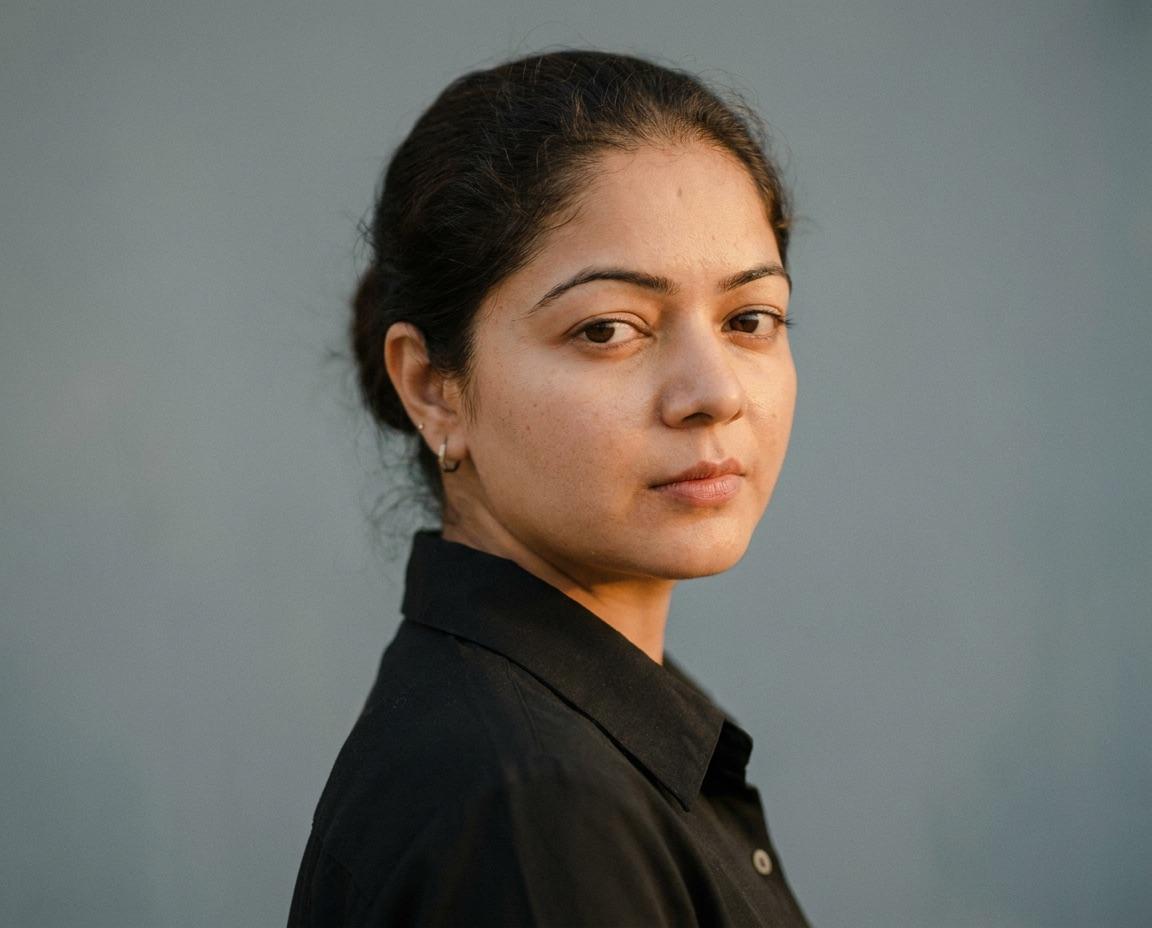
Deepti GautamBangalore, India
Teacher, or facilitator.
Finding the difference between a teacher and a facilitator.
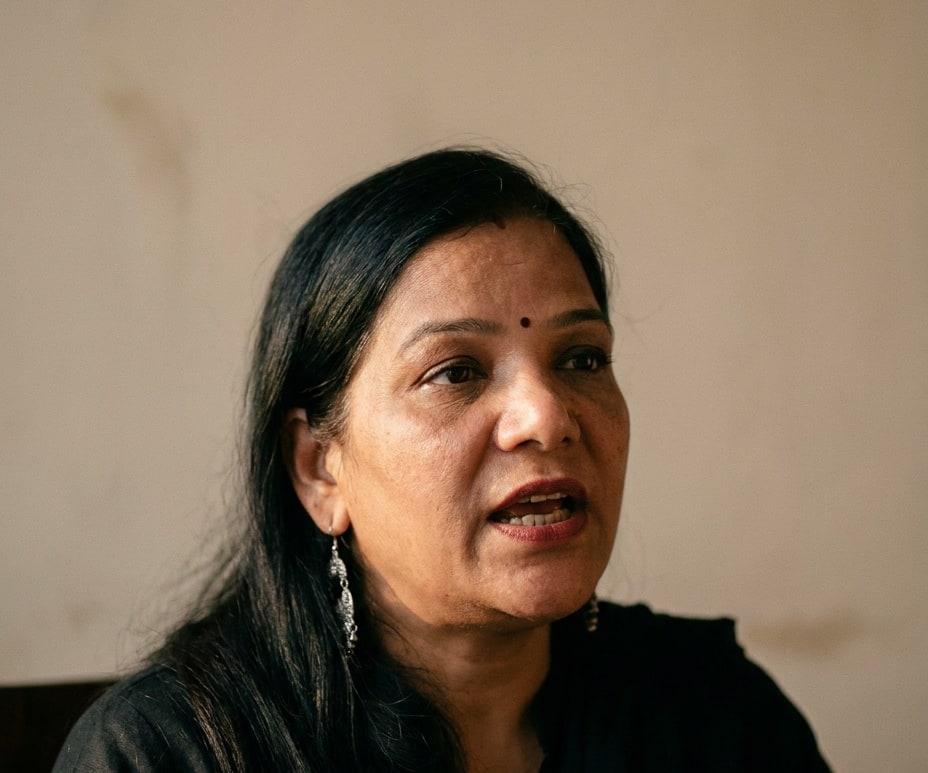
- Now
- Teaching at a school in Bangalore
- Before
- Grades 11 and 12 in Rajasthan, taught in two languages
- Programme
- PgCTL, studied alongside teaching and two small children
- Next
- Hopes to work in the USA, and to move into leadership
Deepti had two decades and a B.Ed behind her, teaching primary grades in Bangalore after a postgraduate degree she felt was going to waste, and lecturing rather than facilitating. Studying, she lowered her voice instead of raising it, and challenged a coordinator over an exam paper.
Standing still, and smiling.
Deepti Gautam missed the live class, so she listened to the recording. In it a member of the faculty said that if a teacher’s voice and tone come down, the children will automatically listen. She liked this very much, she says, “because in India we are having habit of screaming: I don’t want this, stop it, like this way.”
She tried it. “Now I am changing in myself and really it is working,” she says. “I’m just standing like this and I am smiling and the children are watching. They are saying, what happened, ma’am?”
Forty students, 35 minutes.
Deepti is from Rajasthan, where she took postgraduate degrees in English and Sanskrit. Her B.Ed was in geography and English. Her mother and her father were both teachers. “Teaching is in our blood,” she says.
Her first classes were grades 11 and 12 at a school in Rajasthan, taught bilingually, in the mother tongue and in English. “English is not their cup of tea,” she says of those students. With 40 children in the room and 35 minutes for a chapter, engaging them in an activity was not easy, and her lesson planning, she admits, “was not good”. She had them learn the question answers and the word meanings. She now thinks she could have taught a chapter through storytelling. “I was not giving them examples,” she says.
The B.Ed, she has come to feel, “was I think only theory”. Looking back on those classes, she puts it plainly: “There I was not a facilitator, there I was a teacher. That was the biggest difference which I noticed.”
You just try Suraasa. Then you will learn the difference between theory and practical.
Grade 2, and wanting more.
While she taught in Rajasthan she also sat competitive exams for a government job. “Here in India we are having one tendency,” she says. “If you are getting into government job, your life is secure.” She did not succeed. After her marriage she moved to Bangalore, where the exams were too far away to sit. “Now I think that is not in my destiny,” she says.
In Bangalore she joined the school where she still teaches. She was a postgraduate who had taught grades 11 and 12, and she was given grade 2. “I was feeling daily like this is not what I want,” she says. “I want to teach 9th, 10th, 11th, 12th. I believe in growing.”
She first saw Suraasa while teaching online classes from home during COVID. She watched a video, wondered whether to join, and left it. It kept appearing on her Instagram. A friend had done the programme and gone on to a better opportunity. Eventually she decided: “Let us try.”
Six hours of sleep.
She studies while working, with two small children at home. When she was late to a class, the faculty marked her absent, and she took the point: discipline is still needed. Her lesson plans are built around 35 minutes, and she plans her own study the same way. The strategies she is learning for the classroom, she says, “I am using to complete my assignment on the time.”
“I was sleeping ten hours. Now it is not needed. I’m sleeping six hours,” she says. She cooks, looks after the children and helps with their homework. “This is not a torture for me.” She compares the work to gajar ka halwa, and then to something else: “This is a chocolate for me, delicious chocolate.”
The hardest assignments were the ones on camera. A blog and a portfolio were new to her. “I was thinking, blog, what is this blog? What is this portfolio?” She can write, explain and analyse, she says, but presenting slides on a video call “was really very tough task for me”. The second presentation she submitted was, by her own judgement, much better than the first.
The dare to ask.
What she notices in herself now is “a different kind of confidence”. “I can argue with the principal directly,” she says. Two days before her interview, she saw an exam paper being set in a way she did not think was right. It had happened before. “The dare came now,” she says. “I straight away went to my coordinator and I asked her, is it the correct way?”
She talks now about other schools, an international syllabus, teaching abroad and leadership. Her dream is to work in the USA. She likes how children are treated there, “very silently”, and says, “That attitude I want to learn actually.” She adds: “I don’t know, but I can try my best.”
I will never regret whether I’m reaching US or not … I never regret because I’m feeling positivity while I’m doing these things.