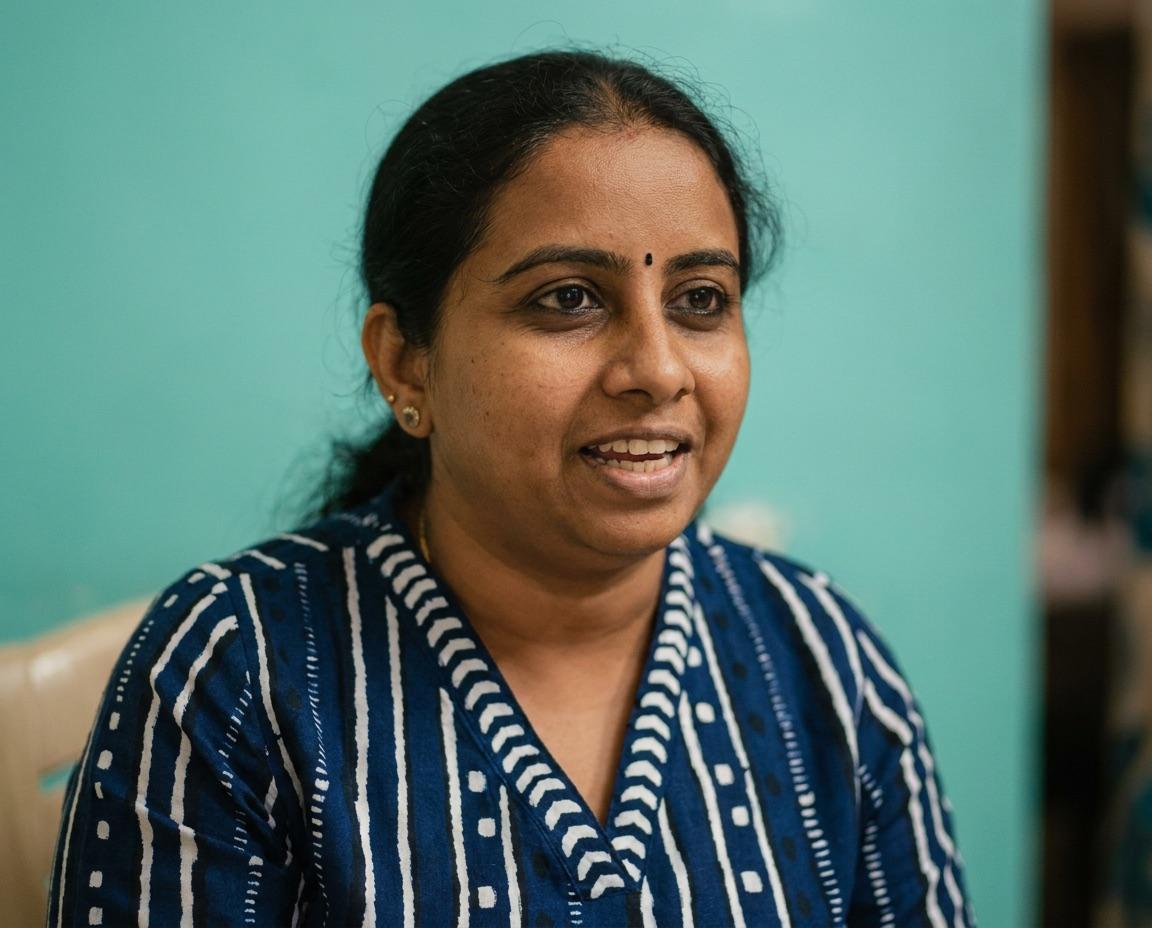
Monika Srivastava
Asking the questions that show what students know

- Course
- Questioning skills and techniques, with Suraasa
- Started with
- Suraasa masterclasses
- Focus
- Questioning for formative assessment
Monika could pull sample papers for summative assessment, but had no reliable way to read learning as a lesson happened, and the books she bought did not help. A short Suraasa course on questioning changed that, and she now plans lower and higher order questions together.
No sample paper for that.
Monika Srivastava puts the gap plainly. “We can get sample papers for summative assessment,” she says, “but for formative assessment we should know various methods through which we can judge.” She wanted to get to know the learning outcomes from the children, and to build questioning into the regular curriculum. “I was struggling with the questioning skills and the various techniques.” She had already attended Suraasa’s masterclasses. The course on questioning skills and techniques is one she completed more recently.
The base for higher order.
The course covered various ways of questioning, and how to integrate them with Bloom’s taxonomy, hinge questioning and Socratic methods. What stayed with her most was the balance between lower order and higher order questions. “Most of the people usually talk about HOTs only,” she says, and their part in building critical thinking and analysis. She came away with a different view. “LOTs is a base for HOT. That is the main thing I learnt from Suraasa.”
Nobody wants to talk about LOTs, and the LOT is equally important as HOT.