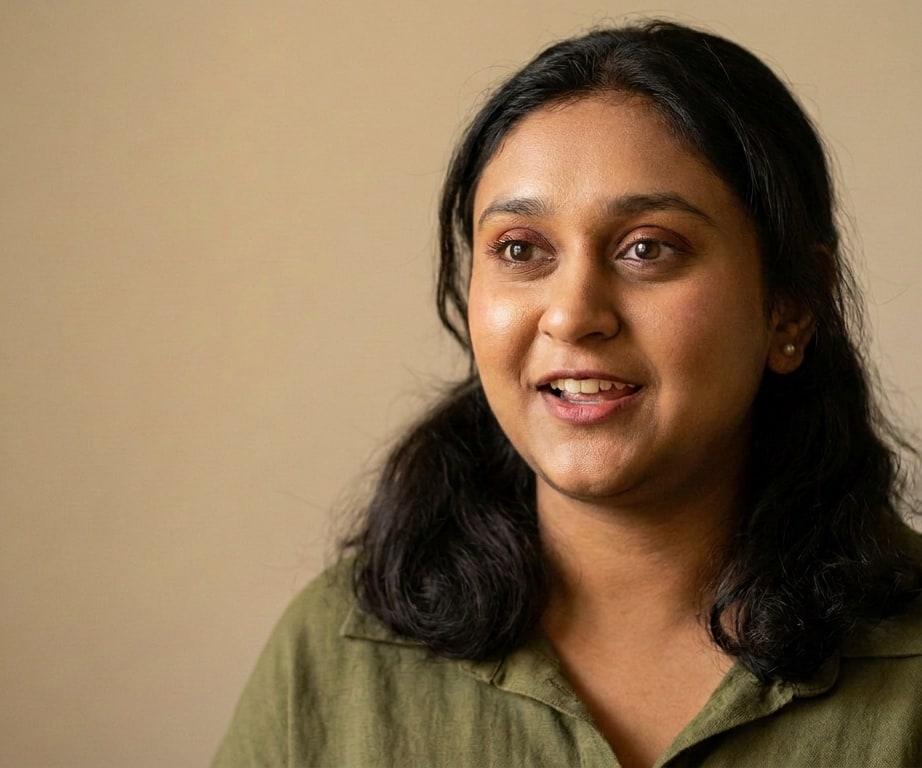
Nishigandha DevareRas Al Khaimah, UAE
Twelve years teaching. Then a UAE classroom.
Taking twelve years of science teaching to the UAE.
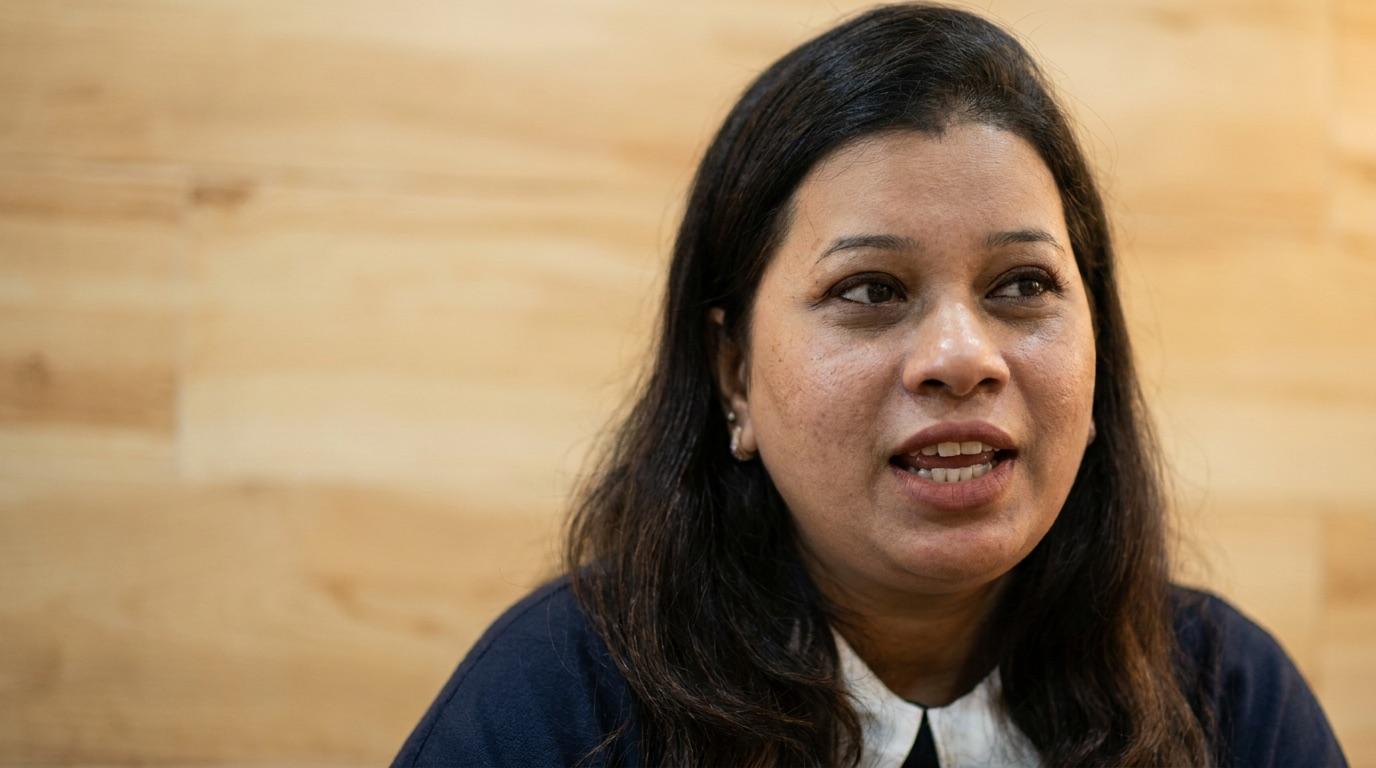
- Now
- Science teacher, placed at a school in Ras Al Khaimah, UAE
- Before
- Over 12 years teaching, across ICSE, CBSE and IGCSE
- Programme
- PgCTL, with extra courses and masterclasses alongside
- Studied
- MSc in microbiology
Nishigandha had taught biology across Indian boards for twelve years and felt her career had stalled, with her family never quite convinced teaching was the right choice. She learned to plan backwards and reflect after each lesson, and was placed at a school in Ras Al Khaimah.
A coaching centre nearby.
Nishigandha Devare wanted to be an architect. She sat the entrance exams, then reached a point where, she says, “I felt that I’m not suitable for this”, and turned to biology “because that was my subject”. While she was still studying she began taking classes at a coaching centre nearby. “There I discovered that this is something which I have in me,” she says. The students understood what she taught and liked how she taught it.
Starting a career in teaching was “really difficult”, she says. She holds an MSc in microbiology and had a corporate job in hand when she took her first teaching post. Her family felt she could do better than teaching. She managed, she says, to convince them that this was what she really wanted to do, and then kept at it. “I just remained consistent and I started doing this,” she says.
Twelve years, and not seen.
In more than 12 years of teaching she has taught ICSE, CBSE and IGCSE, and has taught UAE students online. Across all of them she found the students alike. “Students all over, everywhere, they are same,” she says. “They want us to be friendly, they want us to understand their concerns, they want us to be empathetic towards their problems.” A teacher who builds that patience, she says, will be loved for it.
Her career was another matter. “Somehow I felt that it is not reaching the level where I want to,” she says. The difficulty, as she saw it, was being noticed: “Sometimes you have a lot of things but you do not know whom to reach and how to reach.” What caught her attention about Suraasa was that it trained teachers in international pedagogical practices and got them, in her word, “highlighted”. She reaches for an image, then corrects it. “Suraasa is that kind of ladder which makes you reach there faster. It’s not ladder, basically it’s the escalator.”
The introductory session impressed her with the examples it used, and the self-paced modules held up when she went into them. “I felt that OK, this is something really good and I’m learning something out of it,” she says. “It’s worth doing it.”
Doing Suraasa I realised how to do backward planning, how to plan your lesson, how to implement them in the class.
Planning backwards, then looking back.
The change in her classroom started with planning. “I used to just plan a lesson for that particular day,” she says. She would go in and carry out what she had planned, and afterwards be left with a question she could not answer: “I could not do this. Why I could not do this? I could not figure out that.”
PgCTL taught her backward planning, and a module on reflective practice gave her a way to answer the question. She now looks back at the lesson, changes the plan, and then carries it out. “There’s a difference in what I used to teach earlier and now I teach,” she says. “There’s a huge difference.”
Now I know how to even reflect on your practices. There’s a module where you have to do reflective practice and… understand what went wrong.
A coordinator who kept checking.
Within her first two months she had a call from her programme coordinator, who set out what she would need to do to reach good schools. Nishigandha followed what she said, and the coordinator kept coming back. “This is missing. This is not there. You have to do this. You have to do that,” is how she recalls it. The suggestions ran from free courses and masterclasses to working on her accent. “If you open my Suraasa dashboard you will see a lot of courses going on,” she says. She set her own deadlines for assignments and modules. A message sent at night still got a reply.
Interview preparation worked at the same level of detail. “They have given us very small insights where we may make mistakes,” she says. One of them: “Sometimes we need to be very specific about our experiences.” The team, she says, will tell you what is wrong with your résumé and what is missing from your profile, and ask you to change it.
A school in Ras Al Khaimah.
When she recorded her story, Nishigandha was about to join a CBSE school in Ras Al Khaimah. She had done “a lot of research” on it first, and mentions its big campus. “I am definitely going to learn new things,” she says. Suraasa, she says, “has played a major role in putting me out on the international platform and giving me this opportunity”.
She calls joining the course “the right decision”. Her advice to teachers who want to grow, or to work abroad, splits the work in two. “You be an expert in your subject and Suraasa is going to help you to be an expert in education.”