Noura T
Angles with arms. Functions with jigsaws.
Teaching angles with arms and functions with jigsaws.
- Teaches
- Secondary school mathematics
- Programme
- PgCTL, in Suraasa’s second batch
- Uses
- Jigsaw groups, Simon Says, locus work outside the classroom, GeoGebra
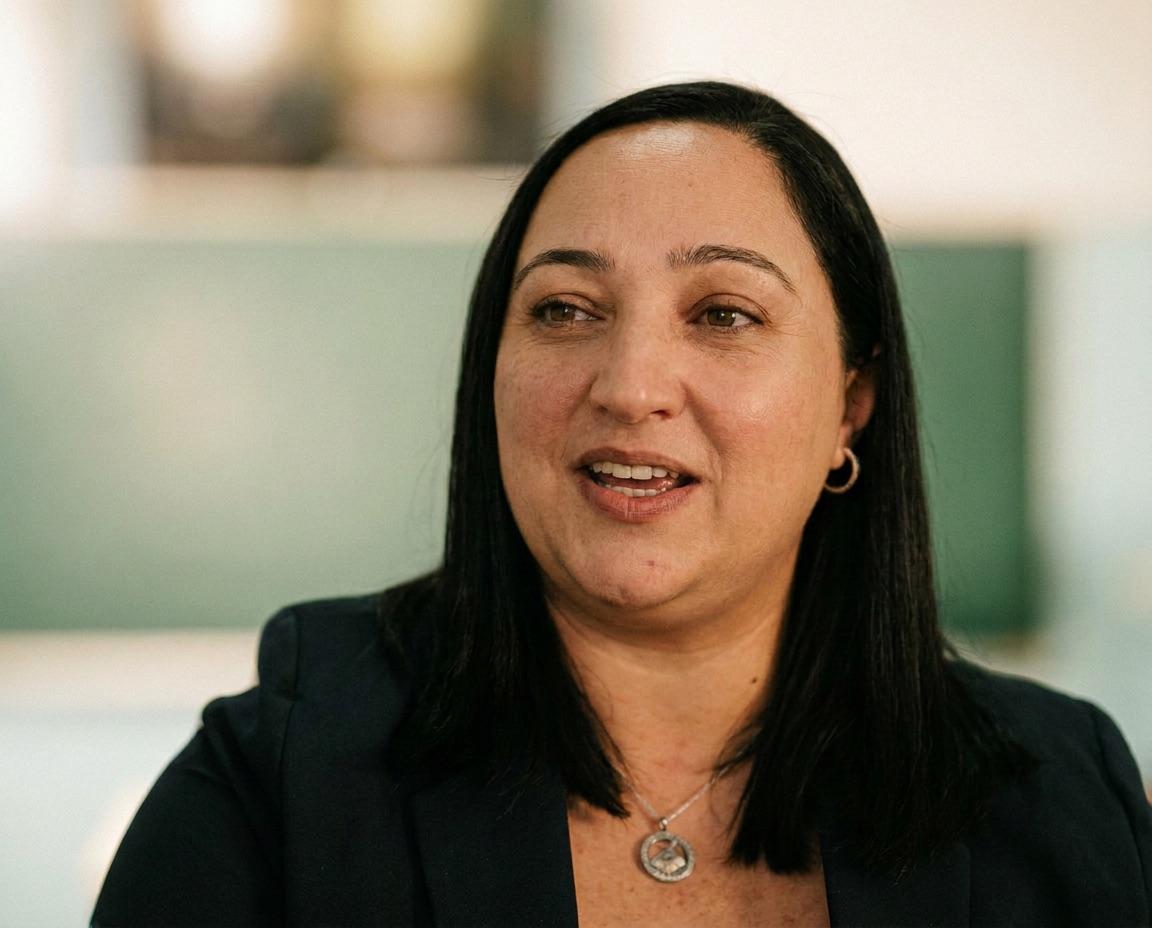
Noura taught secondary maths and found that her students followed a lesson perfectly, then could not recall it, join in, or connect one concept to the next. After PgCTL she rebuilt her lessons around jigsaw group work, Simon Says angles, locus drawn outdoors, and GeoGebra for pre-calculus.
Knowing the maths was not enough.
Noura began her teaching career believing that a teacher who knew the subject very well would be understood. When that proved wrong, she set out to develop solutions, and found the search “challenging and overwhelming”. Most of the resources she came across took what she calls theoretical and non-realistic approaches, “which weren’t fitting the unique mixtures of my classes”. That was when she joined PgCTL, in Suraasa’s second batch, to receive her teaching certificate.
Planning inside the school’s framework.
The programme taught her, she says, to fit her lesson planning into the time boundaries and framework set by her school administration. Between covering the curriculum and preparing students for internal and external exams, there is usually only a small space left “to be innovative and to make the learning experience exciting and fun”.
Practising how to manage classroom dynamics and set high expectations taught her, she says, “to plan every time span during the lesson in a productive way”. To show what that looks like, she hands much of her video over to her students.
The essential skill I earned was to plan all the critical elements, from pre-assessment, setting objectives, AFL… in a sensible and practical mode.
Simon says, make a right angle.
One student describes her smiley face system. Completed homework or a correct answer earned a smiley face in the copybook, drawn with a special pen to avoid cheating, and whoever had the most by the end of the week got a prize or a treat.
For pre-knowledge assessment in geometry she used Simon Says. A grade 9 student remembers it from the year before: “She would say Simon says, make your right angle, and the students would have to demonstrate what a right angle looks like with their arms.”
For cooperative learning she set a jigsaw on finding the inverse of different functions. A student from that class of 16 explains that Noura divided them into four groups. Two groups got the hardest question and two got a really long one, at random each time. Each group solved its question together, and then three of its members would go and explain it to the others. It “made the concept really easy”, the student says.
Locus, outside the classroom.
Locus she taught through discovery learning. A grade 11 student, who had Noura as a teacher in grades 10 and 11, remembers the topic passing quickly because it was easy and fun. “She didn’t just explain it on the board or read it out,” the student says. “She would get us out of class and put us into shapes and show us why each one was that.” Noura also brought her laptop to show why the locus would change, from a circle to a perpendicular bisector.
For pre-calculus she uses GeoGebra, a graphing software. One of her students says it saves time in exams, because they already have an idea of how a graph looks. Thanks to Suraasa, she says, she has learnt “to extend my preparation beyond delivering the material, to facilitate the learning in and outside the classroom”.
I can plan the grey areas efficiently due to my trainer’s guidance and shared experiences with my colleagues during the course.