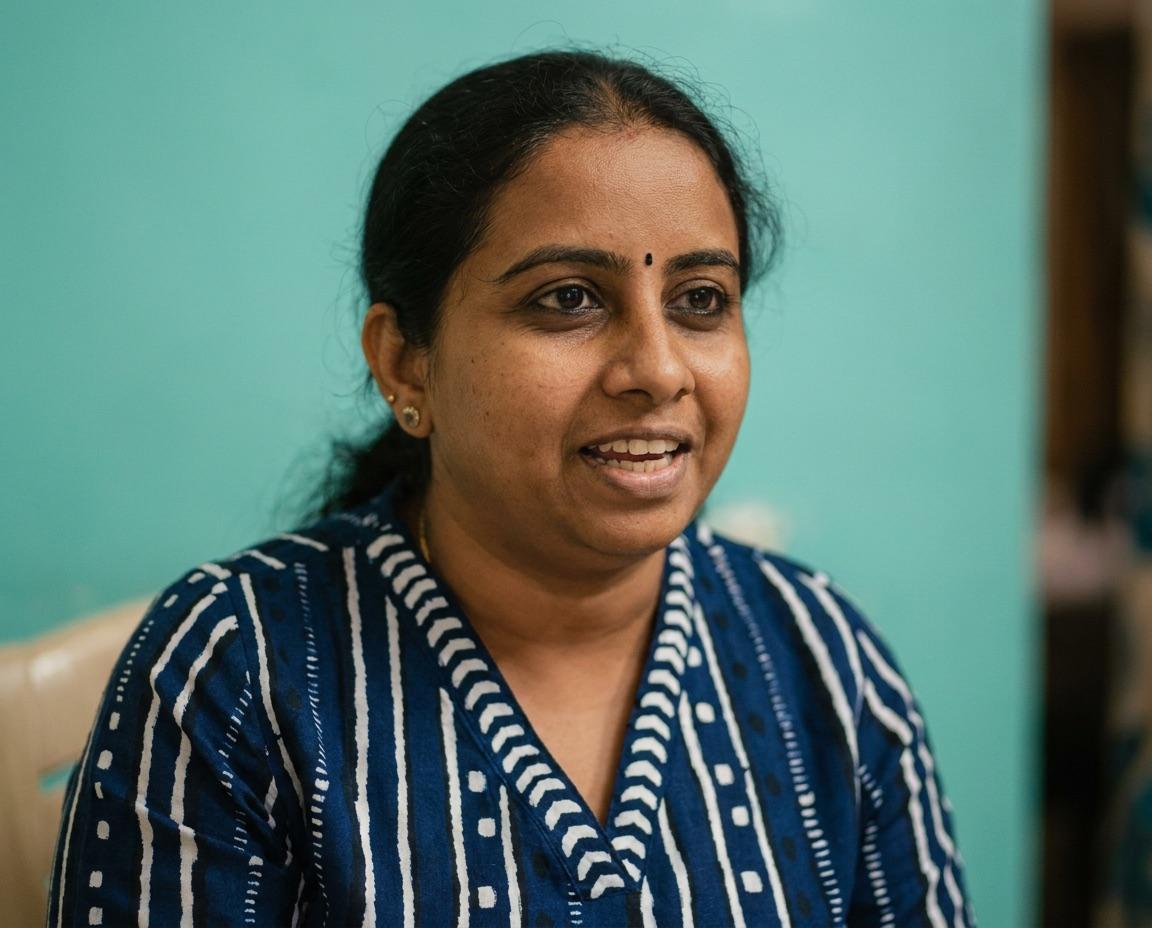
Priya Madhava DasDubai, UAE
An extra slot. For one student.
Putting names to what she already knew.
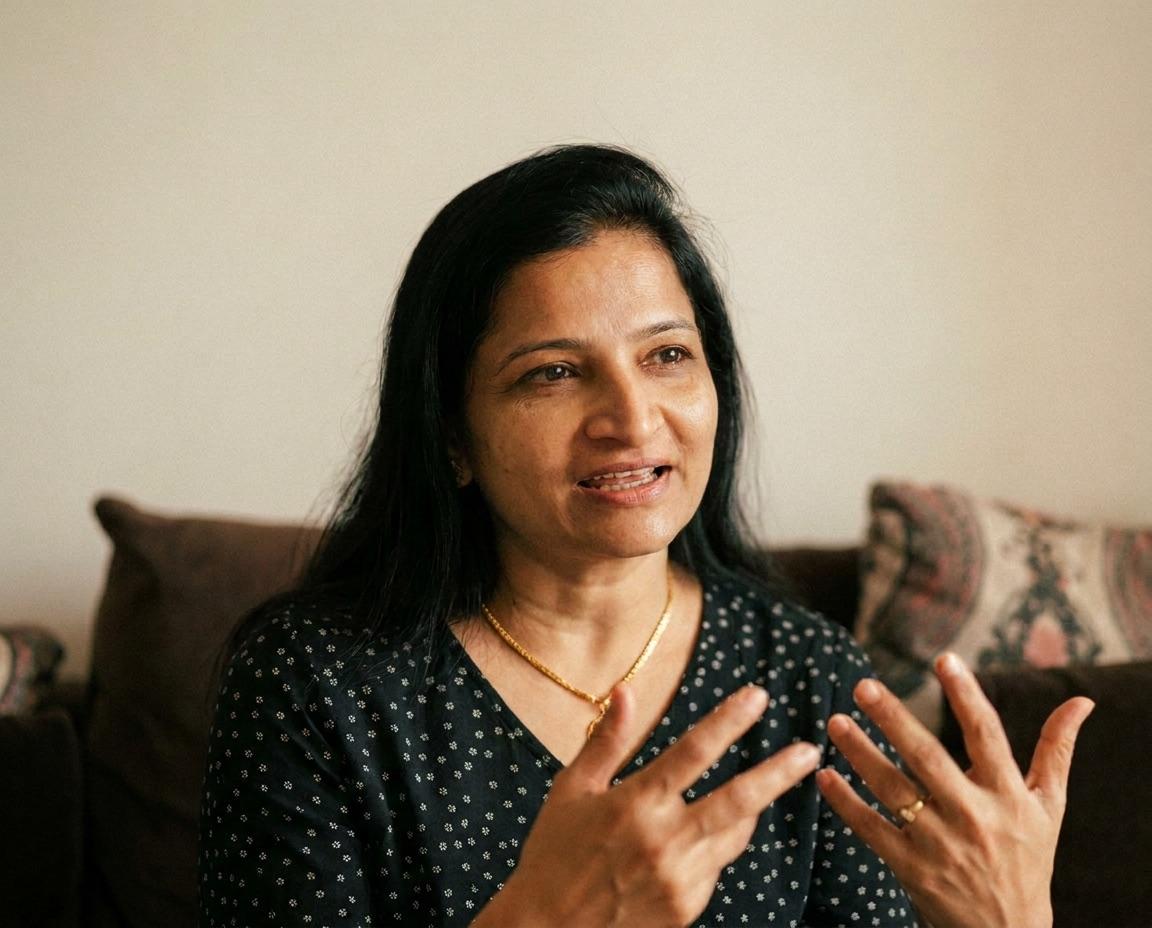
- Now
- Computing teacher and primary activity coordinator at a school in Dubai
- Programme
- PgCTL, after mandatory courses her whole school took with Suraasa
- In class
- An extra teaching slot for one student
Priya has taught computing in Dubai for well over a decade, using methods without knowing what they were called. PgCTL gave her the language behind them and a closer eye for individual need; she now teaches an extra blended-learning slot for one pupil and can see him settling.
The whole staff signed up first.
Priya Madhava Das came to Suraasa through her school, along with everyone else on the staff. “Rules keep changing, everything evolves, technology evolves and even the curriculum evolves,” she says. Last year her school brought in a set of mandatory courses, chose the organisation to run them, and every teacher registered. She and her colleagues had plenty of experience between them. The content was still new to them. “We still had to learn a lot more.”
What caught her attention first was the part on laws, which she calls a front teachers do not know, along with moral ethics and values. “That is the basic of a child’s education,” she says. So when PgCTL came along, Suraasa was already known to the school, and she did not deliberate. “Without a single thought I was ready to join, because I knew what kind of education they are going to provide.”
The actual terms.
She is clear that she was not short of classroom experience, or of anecdotes to share. What she lacked was the vocabulary. “Little did I know that I did not know exactly what are the theories that I am using called,” she says. Constructivism is another example she gives. She describes what the programme did as “giving a clarity, giving a definition, giving a complete, transparent picture for me about education”.
It also left her wary of thinking the learning is finished. “Some people feel that, okay, I’ve done it. I think I’m the best. It’s not like that,” she says. “It’s just a continuous, ongoing learning process.” She gives Suraasa the credit for that awareness.
It was Suraasa that opened my eyes to that. I did not know what it is called, the Skinner’s theory or behaviourism.
An extra slot for one student.
The programme helped her bring differentiation into her class. “It taught me that teaching can be approached in different styles,” she says, with the student’s needs as the first thing to keep in mind. She now builds that into her lesson plans, and says it helps her identify the students who need it.
For one of them she went further. With school running as distance and then blended learning, she started taking an extra slot to teach him. “I’ve taken an extra slot in teaching this student and I can see the difference,” she says. She puts the difference down to familiarity: a student who gets used to a teacher, she says, settles with the teacher.
She says her bond with her students has strengthened, and she credits the programme for it. She also praises her tutor on the Zoom sessions. He was a good listener, she says, who made the sessions comfortable enough for teachers to share their thoughts, and they were “fun filled” as well.