Sharjil Hussain
The learner's side of the desk.
Thinking from the learner's side of the desk.
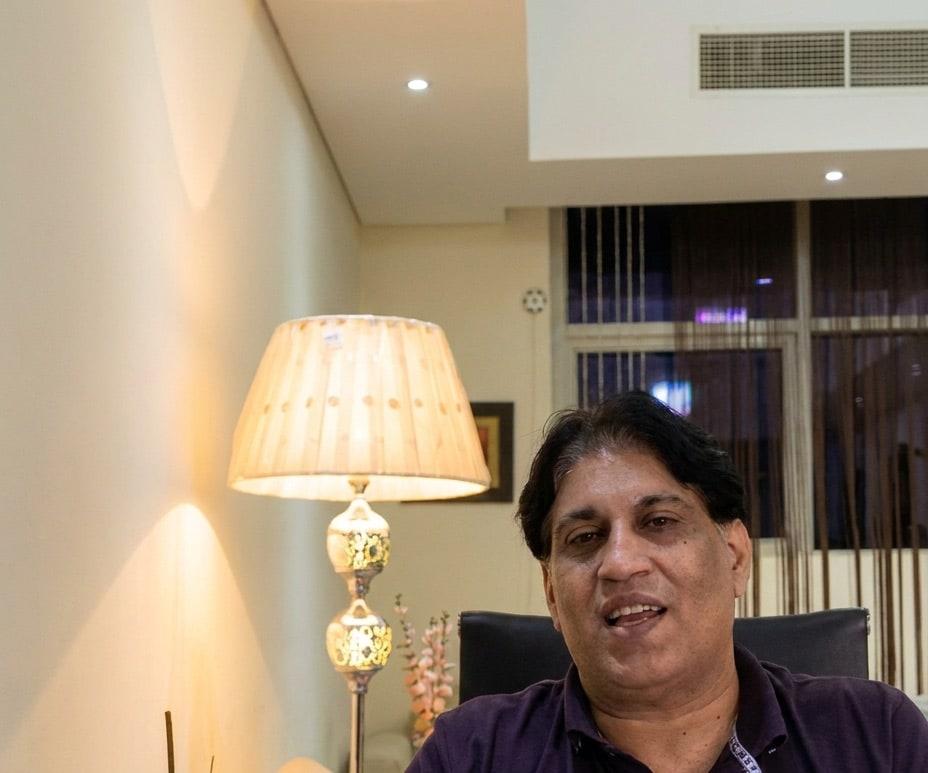
- Teaches
- Business and accounts
- Programme
- PgCTL, just completed
- Result
- Pedagogy exam cleared at the first attempt
Sharjil taught business and accounts and wanted to be the kind of teacher he still remembered from school, without knowing what was missing in his own practice. He began reasoning as a learner rather than a teacher, and cleared his pedagogy exam at the first attempt.
The story of a stolen watch.
Sharjil Hussain does not begin with himself. He begins with a story. A successful young man goes to visit his old school teacher and, over a cup of tea, reminds him who he is: the boy who stole a classmate’s watch in third grade. The teacher had asked the whole class to stand, face the wall and close their eyes. He went from pocket to pocket, found the watch, and carried on to the last student. Then he gave it back to its owner and never named anyone.
“You saved my dignity that day,” the man tells him in the story. “I’m a very successful person today, but whatever I am, it’s just because of you.” The teacher smiles. He cannot remember who stole the watch, he says, because he searched all the pockets with his own eyes closed as well.
What was missing.
Only then does Sharjil introduce himself, as a teacher of business and accounts who has just completed PgCTL. “I am a teacher by choice,” he says. “And I always wanted to be a teacher like the one I just talked about.” The trouble was that he never had a clear idea of what was missing. Once he started the course, he says, he began finding answers to his questions. “I figured out what was missing. I changed my thinking paradigm completely.”
I started thinking from the point of view of a learner… and the result was that I cleared my pedagogy exam in the first attempt.
In the shoes of the learner.
The result he names is an exam. He cleared his pedagogy exam at the first attempt, and adds that he did not prepare for it much. What helped was something he had picked up from his professors. “Whenever I had a problem answering a question, I jumped in the shoes of the learner and figured out my correct answer,” he says.
Everyone has their own goals, he says, and “success is pretty subjective”. His own measure is “to become a teacher who lives in the hearts of his students”. He believes the course has helped him towards that, and he ends on one line: “This is just the beginning.”