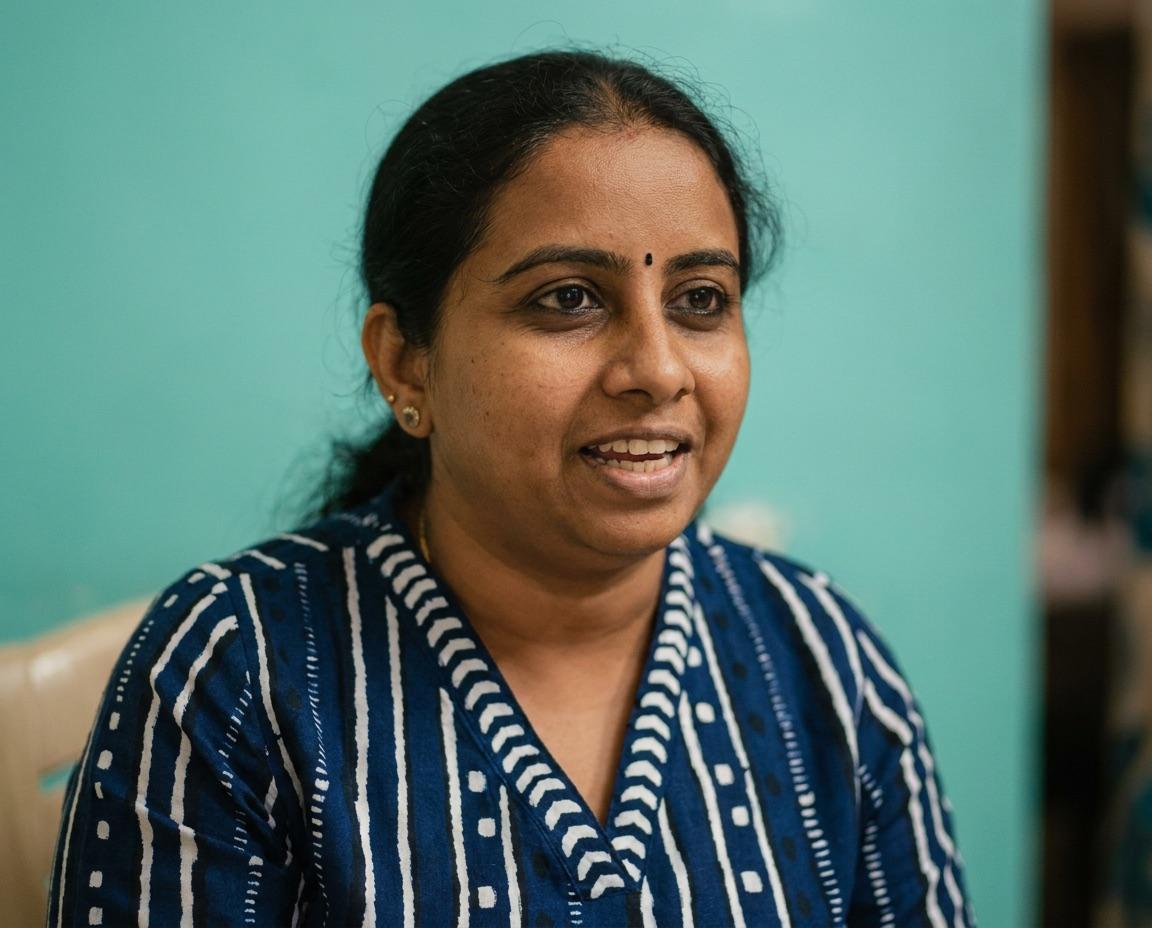
Tanvi KalraIndia
Biology, with debate. And colour pencils.
Bringing debate and color into biology lessons.
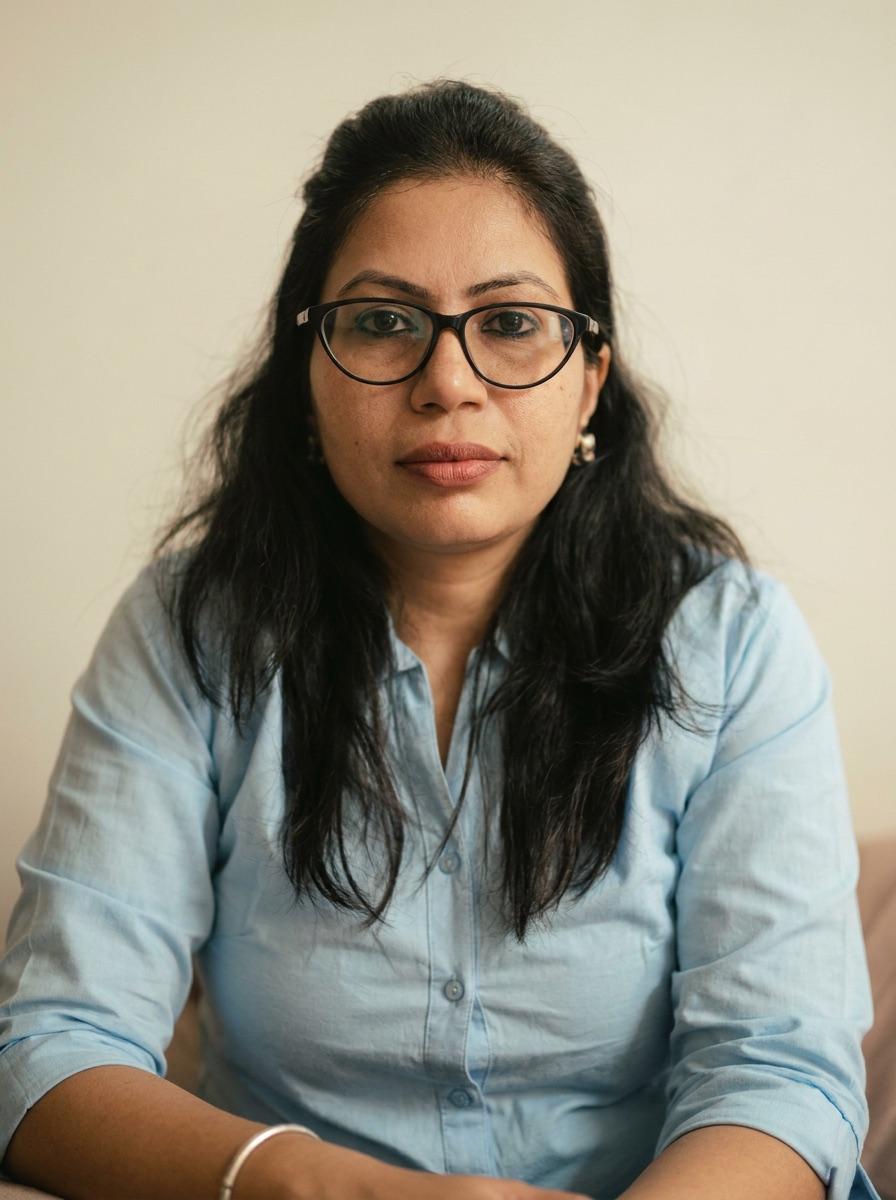
- Now
- Biology teacher and senior wing activity in charge at a CBSE school
- Based in
- Karnal, Haryana
- Before
- Master’s in microbiology, University of Delhi, then two years in research
- Programme
- PgCTL, two months in at the time of recording
Four years into teaching biology at a CBSE school, an assessment showed Tanvi where she had stalled. Two months into PgCTL her classes run on differentiated activity, grade nine debating crop science and grade eight drawing their favourite microbe, and the management praised her in a staff meeting.
Colours out, in grade 8.
The topic was microorganisms, the class was grade 8, and Tanvi Kalra’s instruction was short: “Just draw your favourite microbe.” Out came the colours. “In grade eight, who expects that ma’am will tell us to take out our colours and make some interactive sheet,” she says. Each student then had to write five points on why they loved that microbe. “Maybe it is a friendly microbe, or it doesn’t cause disease, or the structure they like.” She calls it a winning moment: “I saw everyone was engaged in drawing, colouring their favourite microbe.”
In grade 9 the chapter was improvement in food resources, where students have to understand crop variety management and how new crops are created to meet a requirement. “I divided the class into groups, according to their interests, that who wants to take which topic. And then they debated,” she says. Discipline held and the points came, though “some of them were shy, I felt”. The school’s management noticed, and said in a teachers’ meeting that they liked how Tanvi was teaching. “So that was a win for me that day.”
Then I realised, yes, I’m not only doing the course, I am likewise getting good in my teaching roles.
Made for teaching, not research.
Tanvi took her bachelor’s and master’s degrees in microbiology at the University of Delhi, with a gold medal in the master’s, and enrolled for a PhD on a fellowship. While doing research she took practical classes for master’s students. “That was the time it hit me somewhere that I am made for teaching, not for research purpose,” she says.
She left with two years of research experience, went home to Karnal in Haryana and began teaching. She also completed a B.Ed and an M.Ed. In her first school she taught biology along with English. She calls the CBSE curriculum her forte. Today she teaches biology and is the senior wing activity in charge for high school, planning activities for the students across the year.
Two wake-up calls.
She found Suraasa in the Covid period, when she had some time to herself. “I was just scrolling through reels. I would not deny that,” she says. She sat its International Teachers’ Olympiad without studying for it, to check her level. The questions were situation-based and asked her to apply what she knew, and she came away aware of areas to work on. “That was a wake-up call for me,” she says. She began setting teaching goals.
About two years later, she says, she “really took it seriously” that she needed to grow as a teacher. She met the Suraasa team at Didac India and took the CPAT assessment. Its detailed report was the second wake-up call. “I was kind of shocked in some areas that, OK, I’m at a beginner level, OK, here I’m at an advanced level,” she says. Pedagogy surprised her most. Having taught grades 7 to 12, she had assumed she knew what was best for her students. “We need to study how to teach, the latest trends which are going on. It’s not that we know it all.”
Printouts in a free lecture.
At the time of recording she was two months into PgCTL. “Initially I found it a very intensive course,” she says. The hard part was the skill evidence assignments, demanding “a lot of hard work, lot of your analytical, critical thinking skills”. The first month went on working out what the rubrics expected, and the feedback on her first assignment showed her where to improve. On one assignment she scored a perfect three. “So I was like, OK, I got it.”
She fits the study into the school day. “If I get a free lecture or a time in between, I carry my printouts with me,” she says. She highlights the main points, and when she has an assignment to do she carries research papers in a file. Help, from an assigned contact, is “just a message away or a call away”.
It will take out the best from you. You don’t know that you can be at that level.
Goodbyes at the end of class.
Her confidence was good before, she says, and it is higher now, because “I go in my class now more well prepared, well aware”. She reflects on her lessons, and so do her students. When she leaves the classroom, students now say “OK, bye ma’am, take care”. “They are attached now more emotionally also, I feel,” she says.
She has worked in the CBSE curriculum and wants to explore international schools too. On the Suraasa platform she has made a video profile, something she had never done before. “You may be talented, but you need to show that yes, you have it in you,” she says. Her advice to teachers in any curriculum is plainer: “Plan your lessons well, stay updated.”